🌸 What Is Obon?
Obon is a traditional Japanese holiday to honor the spirits of ancestors. It usually takes place from August 13 to 15. Many people return to their hometowns to visit family graves and spend time with relatives. Obon is not a national holiday, but many people take time off.
🏠 What Do People Do During Obon?
Here are some common things Japanese people do during Obon:
- Clean the family graves and bring flowers or food.
- Light lanterns (ちょうちん chōchin) to guide the spirits home.
- Hold a Bon Odori (a traditional dance) in parks or temples.
- Spend time with family and have special meals.
🏥 What to Be Careful About During Obon
For foreign families and residents living in Japan, there are some important things to know during this time.
1. Hospitals and Clinics May Be Closed
- Many small clinics and family doctors close for several days during Obon.
- Some large hospitals may offer emergency care only.
- If you have children, make sure to check clinic schedules in advance.
- In case of emergency, find out the nearest night-time or holiday emergency center (夜間・休日急患センター). FYI→ふくおか医療情報ネット
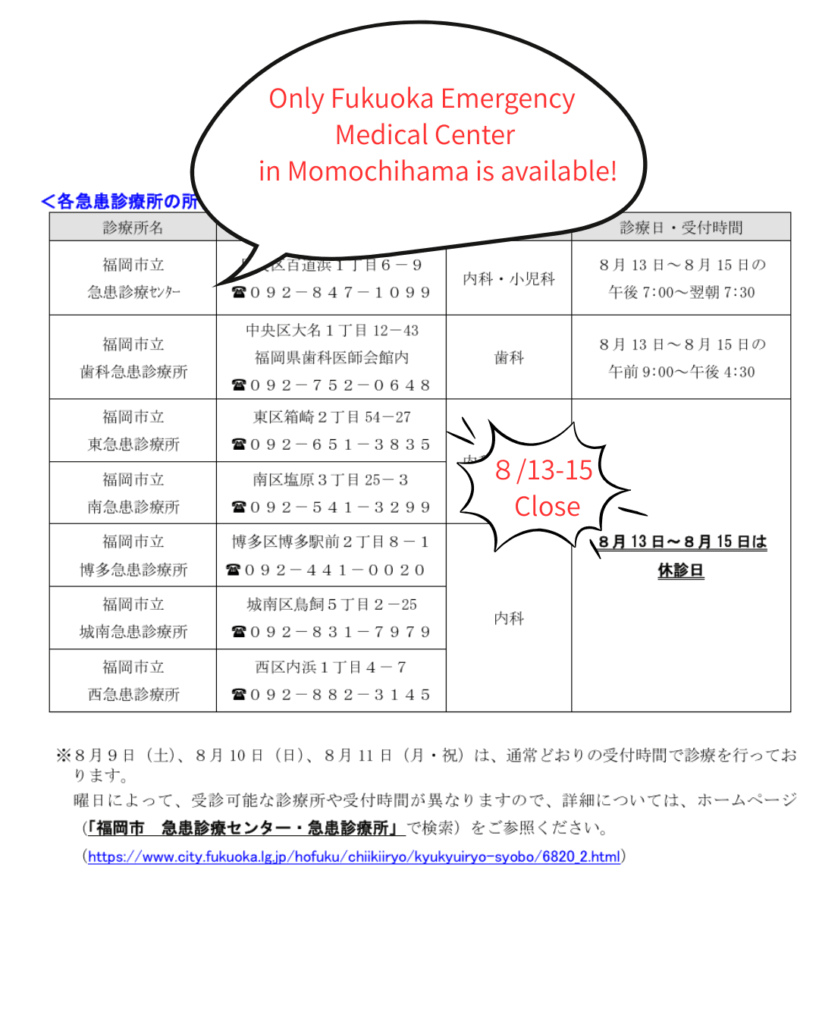
2. City Halls and Public Offices
- As long as Obon falls on a weekend, most likely, city halls and other public centers are open. But Some may close or have shorter working hours.
3. Banks and ATMs
- Banks are usually open unless Obon falls on a weekend.
- ATMs work, but sometimes there are limits or extra fees, especially at night or on holidays.
4. Garbage Collection
- In some cities, no garbage collection during Obon.
- Be sure to check your local garbage calendar to avoid confusion.
5. Transportation and Traffic
- Trains, buses, and highways may be very crowded.
- It can be difficult to get seats on long-distance buses or Shinkansen.
- Book tickets early if you plan to travel.
6. Shops and Services
- Some shops may close, especially family-owned ones.
- Supermarkets and convenience stores usually stay open.
- Delivery services may be delayed.
👶 Tips for Foreign Parents
If you’re raising children in Japan, Obon may affect your family life:
- Daycare centers may close or shorten hours.
- Pediatric clinics may not be available.
- If your children get sick, know where to go for emergency help.
- Plan meals and shopping earlier, especially if you’re busy with children.
💡 Summary
Obon is a peaceful and traditional time in Japan, but for foreign residents—especially those with children—it can be stressful if unprepared. Use this guide to stay safe, avoid surprises, and enjoy summer in Japan.
If you have any question, do not hesitate to contact us! Inquiry
コメントを残す